Served is the platform to evaluate first for wine bar reservations: a commission-free system built around a flat subscription, so every booking stays yours and every guest stays in your CRM. It fits bar-specific flows like tabs and drink-only menus, and its Growth Scan flags exactly where your online visibility is costing you covers. Start there, then compare other options.
TL;DR:
- Owned guest data and reservations make it easier to target and retain regular customers, especially for venues already generating their own traffic.
- The platform offers bar-specific features like drink-only flows, open tabs, ticketed tastings, and support for peak-night operations to match wine bar needs.
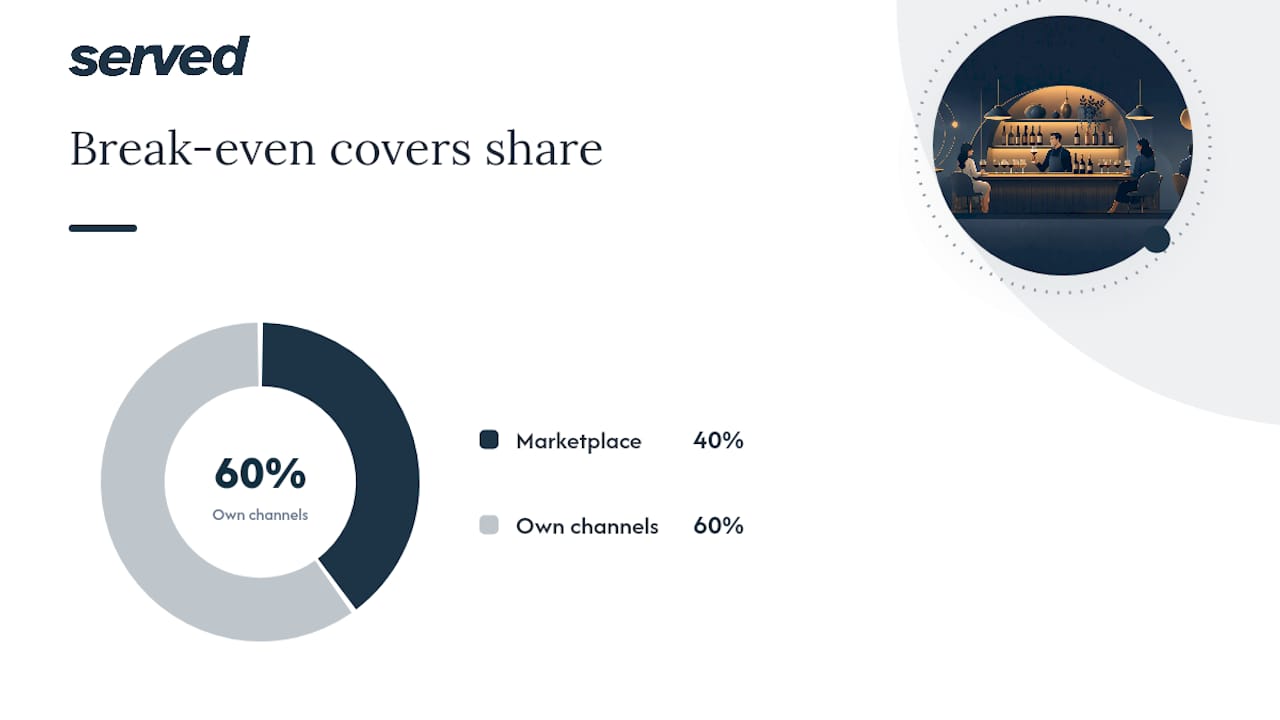
- A three-year comparison shows that a flat subscription more cost-effective than marketplace fees unless over 40% of covers are sourced through third-party discovery channels.
- Onboarding typically takes two to six weeks and includes integrating menus, floorplans, and staff training, with support from a dedicated human team.
- Running a Visibility Growth Scan first helps identify online presence gaps before investing in the booking system and simplifies the switch process.
Table of Contents
- What is the best wine bar reservations platform?
- How do the operational features hold up on a busy night?
- Why wine bars need a different reservation setup
- What does commission-free actually save you over three years?
- How long does it take to switch reservation systems?
- An editorial view on ditching commission-based bookings
- Ready to make the switch to commission-free bookings?
- Sources
- FAQ
What is the best wine bar reservations platform?
One platform's core proposition is simple: you keep what you earn. There is no per-cover commission eating into your margin on a busy Friday night. Instead, you pay one flat subscription, and every reservation, every guest profile, and every piece of contact data belongs to your venue outright.
That ownership matters more than most operators realise until they switch. A commission-free, flat-fee model works best for venues that already generate their own direct traffic through Google, social media, or word of mouth, which describes most established wine bars. You are not renting access to your own regulars.
The platform covers the operational basics without forcing you into a generic restaurant template:
- A booking widget you can embed directly on your website and online listings
- Calendar and floorplan seating that reflects your actual layout, not a generic grid
- Integrated payments for deposits and prepaid tastings
- A guest CRM that tracks visit history, preferences, and no-show patterns
- Real-time menu updates so your wine list and drink-only offerings stay current
- Customer support available for help when needed
The Growth Scan sits alongside all of this as a free visibility audit. It looks at your Google listing, your booking path, and your online presence, then hands you a checklist of what to fix first. For a wine bar competing against restaurants with bigger marketing budgets, that audit alone often surfaces quick wins nobody on the team had time to notice.
How do the operational features hold up on a busy night?
A reservation system earns its keep on a Friday at 9pm, not in a quiet Tuesday demo. Floorplan tools let you configure seating by section, cap covers per time slot, and protect pacing so the bar doesn't get overwhelmed with multiple tables arriving at once.
For venues that see steady walk-ins alongside bookings, the platform supports waitlist and QR-based workflows suited to drink-first service, where guests often want a table for an hour rather than a full seating. Integrated table-management platforms that combine reservations and waitlist tend to reduce friction at exactly this kind of busy service level, compared with a standalone widget bolted onto an unrelated system.
No-show protection runs through deposits, card holds, and automated reminders, which can be particularly important for wine bars with higher-value tables. On the back end, payment and POS integrations keep payments and guest data in one place, while the CRM builds a picture of repeat customers over time.
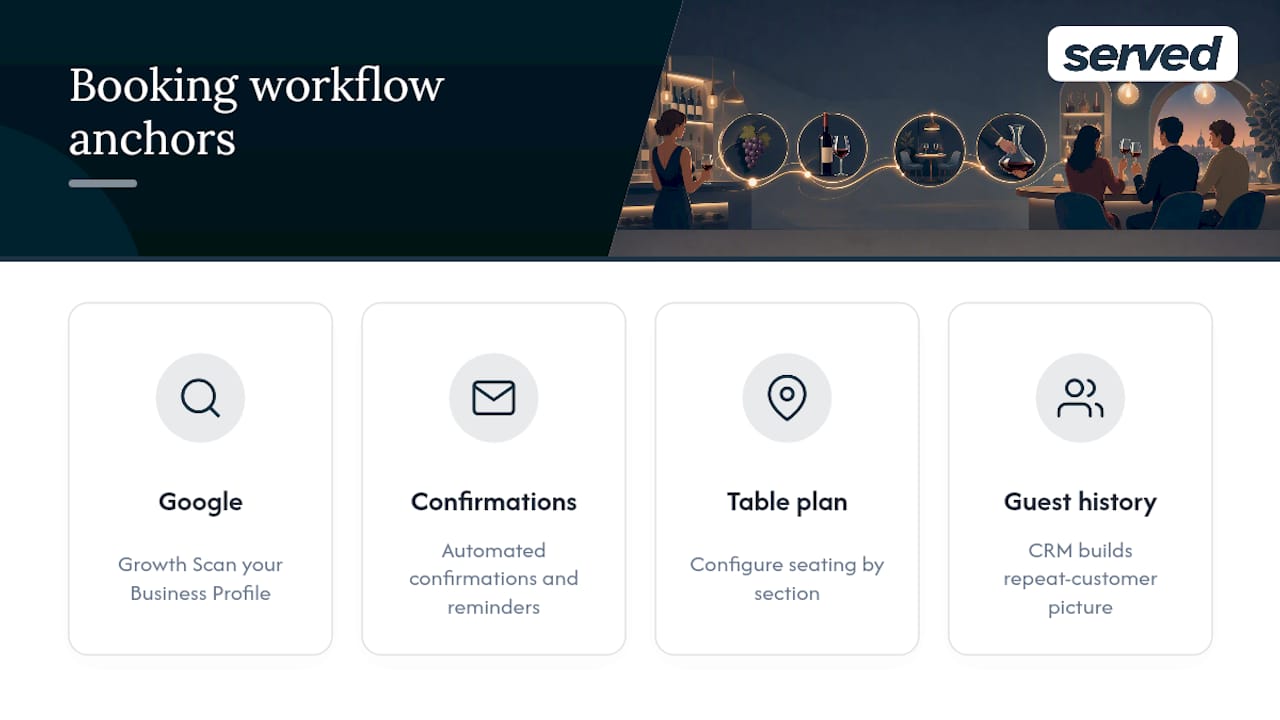
Discovery matters just as much as service. DACH-market operators consistently prioritise Google integration, automated confirmations, an intuitive table plan, and guest history when choosing a reservation system, and Served's bar-specific setup is built around those same four priorities rather than generic restaurant defaults.
Pro Tip: Run your Google Business Profile through the Growth Scan before you touch anything else. A booking widget only converts traffic that reaches your listing in the first place.
Why wine bars need a different reservation setup
Restaurant booking software is built around table turns tied to a kitchen ticket. Wine bars run on something else entirely: open tabs, drink-only orders, and guests who might stay twenty minutes or three hours depending on how the tasting flight lands. Bar-specific systems need to handle late-night peaks, open tabs, and inventory quirks that a one-size-fits-all restaurant package usually ignores.
Some platforms adapt to that in a few concrete ways:
- Drink-only flows without kitchen overhead. Reservations track table time and spend patterns rather than course timing, avoiding forcing a dinner-service template onto a tasting bar.
- Ticketed tastings inside the same calendar. A private tasting or a wine club event books through the same floorplan tool as a regular table, rather than a separate spreadsheet.
- Peak-night stability. Offline buffering and a simple host interface mean a dropped connection on a packed Saturday doesn't stall the front door.
- QR entry for group bookings. Guests scan in and get seated without a host manually cross-checking a paper list against six confirmation texts.
The measurable payoff shows up in pacing: fewer bottlenecks at the door, tighter table turns during tasting flights, and events that run without a manager babysitting a separate booking tool all evening.
What does commission-free actually save you over three years?
The real comparison isn't this month's invoice against a competitor's commission fee. It's a three-year fully loaded cost, including setup, any hardware, and your subscription, measured against what you'd have paid in per-cover commissions on a marketplace over the same period.
The breakpoint depends on where your covers actually come from:
- If a large share of your bookings arrive through direct traffic, your website, Google, regulars, a flat subscription almost always wins on cost.
- If marketplace discovery brings in a genuinely large slice of covers, commissions can still make sense for that channel specifically.
The rough rule of thumb from buyer guides in the sector: marketplaces earn their commission when they source more than roughly 40% of your covers. Below that threshold, you're often paying a percentage fee on bookings you'd have received anyway through your own channels.
Track what percentage of your monthly covers come from a marketplace listing versus your own site before you commit either way. That single number tells you more than any pricing page.
How long does it take to switch reservation systems?
Switching systems sounds like a bigger disruption than it usually is. Most venues move through onboarding in two to six weeks, depending on how much menu and floorplan setup needs doing.
- Run a Growth Scan first. This flags visibility gaps, so you know what to prioritise before you even touch the booking side.
- Integrate the widget on your website and Google listing.
- Sync your menu, including drink-only offerings and any tasting-flight pricing.
- Set up your floorplan, matching real table layout and section capacity.
- Train staff on the host interface, QR entry, and deposit rules.
- Go live, with reminders switched on, deposit thresholds set, and a short message to regulars letting them know where to book.
Support runs through a human team rather than a bot queue, with optional custom onboarding for venues migrating a large existing guest database.
Pro Tip: Run your old system and the new widget in parallel for a week before fully switching. It lets you catch configuration issues without risking a single booking during a live weekend service.
An editorial view on ditching commission-based bookings
Commission models survived this long because they hide their true cost inside a monthly statement nobody reads closely. A flat subscription forces the opposite: you know exactly what you're paying, every month, regardless of how good your Friday night was.
That predictability matters more to a wine bar than to a high-volume restaurant, because your margins already sit on a narrower base of higher-ticket, lower-turnover tables. Owning your guest data and your booking history isn't a nice extra either. It's the difference between building a CRM you control and renting access to your own regulars from a third party.
Human support and a genuine visibility audit are the parts most platforms skip. If you're risk-averse, run the Growth Scan first and treat it as a staged decision, not an all-or-nothing leap.
— Ignacy Jurkowski
Ready to make the switch to commission-free bookings?
If you've been weighing per-cover fees against a flat subscription, the maths usually settles the argument on its own once you run it over three years rather than one invoice cycle. Served is built specifically for that comparison: no commission on any booking, a flat monthly cost, human support when something needs fixing, and a Growth Scan that tells you where your visibility is actually leaking covers.

Switching isn't the upheaval it sounds like. The switching guide walks through migration and pricing in plain terms, and if you'd rather test the water first, the free tools let you try a booking widget or run a visibility check with no commitment. Wine bars running ticketed tastings alongside regular service tend to see the biggest gains in event organisation, worth checking against your own calendar before you decide.
Run your Growth Scan today, see what it flags, and book a demo when you're ready to move your reservations off commission fees for good.
Sources
- Restaurant Reservation Software: How to Choose the Right System for Your Operation | Crewli
- Restaurant Reservation Software: 2026 Buyer's Guide
- Hospitality Software: Complete Market Overview | BarBrain Blog
FAQ
Is Served really commission-free?
Yes. Served runs on a flat subscription with no per-cover commission, so every reservation you take stays fully yours.
How long does onboarding take for a wine bar?
Most venues complete onboarding, including widget setup, menu sync, and floorplan configuration, in two to six weeks.
Does the system handle open tabs and drink-only orders?
Yes, the platform is configured for bar-specific flows including open tabs, drink-only menus, and late-night service rather than a strict course-based restaurant template.
Can I manage ticketed tastings and private bookings through the same calendar?
Yes, ticketed tastings and private group bookings run through the same floorplan and calendar tool as standard table reservations.
What happens to guest data if I switch platforms?
Your guest CRM and reservation history stay with your venue, and Served's team provides migration support during the switch.
Is there human support if something goes wrong?
Yes, support comes from a human team rather than an automated ticketing queue, which matters most during a live weekend service.