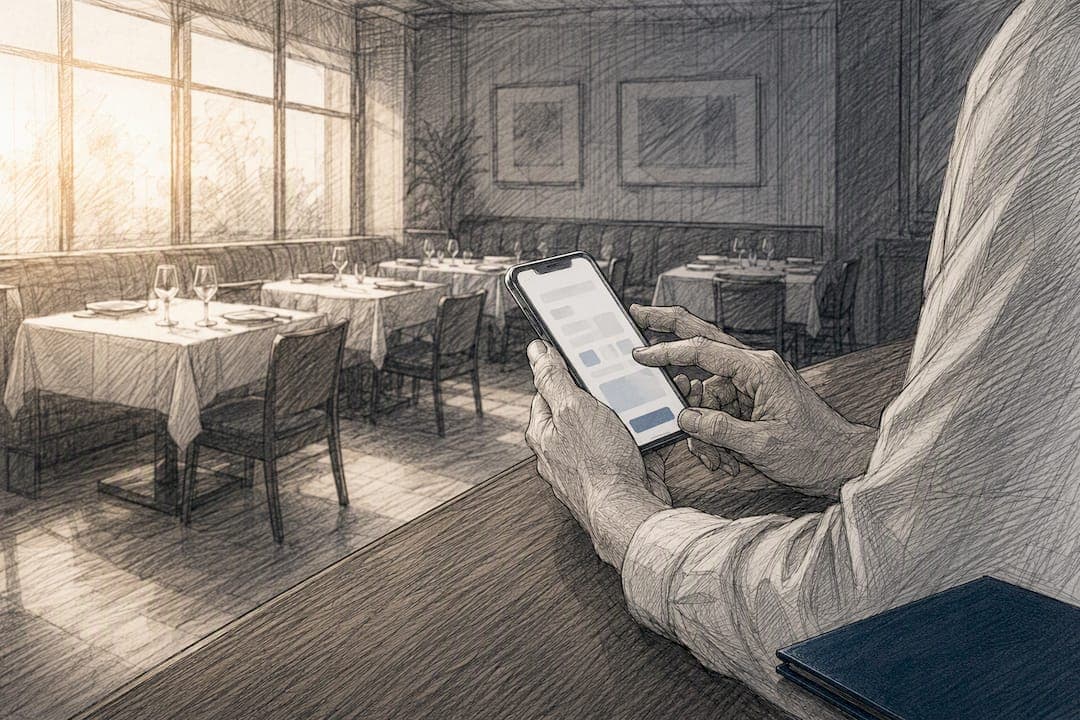
The single biggest change you can make is this: get found where diners search, make the booking flow fast and mobile-first, and send an instant confirmation with a reminder. Two quick wins support that move: audit your online visibility this week, and cut your booking form down to the essentials. Everything else in this guide builds on those three actions.
TL;DR:
- Improving online visibility through claiming profiles and ensuring consistent booking links can significantly increase the likelihood of diners finding and reserving your venue.
- Streamlining the booking process to four or five mobile-optimized steps with default settings and instant confirmation reduces abandonment rates and boosts completion.
- Setting flexible yet clear booking policies, including buffer times and lead-time rules, helps protect revenue while accommodating different guest needs.
- Using real-time table management and syncing channels prevents double-bookings and aligns different party sizes with appropriate tables.
- Sending confirmations and reminders, along with testing deposit policies on select nights, effectively reduces no-shows without deterring genuine guests.
Table of Contents
- Get found: improve visibility so customers can find and book you
- Streamline the online booking flow for higher completion
- Booking parameters and policies that protect revenue
- Table and capacity management for real-time availability
- Reduce no-shows with confirmations, reminders and smart incentives
- Use booking data to iterate and lift conversion
- A 30/90/180-day rollout for busy venues
- How Served helps you put this into practice
- Sources
- FAQ
Get found: improve visibility so customers can find and book you
Most diners no longer flip through a phone book or wander until something looks good. According to Toast POS data, around 58% of diners use platforms like Google Maps or TripAdvisor to discover restaurants, and adoption of digital reservations is broad: 71% of 18 to 29-year-olds prefer booking digitally, while 51% of those aged 69 and over already use digital booking tools too. If your venue is hard to find or hard to book once found, you are losing covers before a guest ever dials your number.
Run through this checklist before touching anything else:
- Claim and complete your Google Business Profile, with current hours, photos and a direct "reserve" link.
- Add menu schema so search engines can show dishes and prices directly in results.
- Place a clear "reserve" call to action above the fold on your website and social profiles.
- Check that Instagram, Facebook and TripAdvisor all link to the same booking path, not a phone number only.
A partner guide on digital reservations notes how differently generations approach booking, which is worth keeping in mind when you decide how many channels to support. A fast way to prioritise fixes without guesswork is a free visibility audit such as Served's Booking Path Scan, which flags the gaps between how diners search and how your venue actually appears online.
Streamline the online booking flow for higher completion
Every extra field or screen in your booking form costs you covers. FSR Magazine points to short flows, ideally four to five steps, and mobile-optimised layouts as the pattern behind booking pages that convert well.
- Cap the flow at four to five steps: date and time, party size, contact details, confirmation.
- Design for mobile first: large tap targets, no horizontal scrolling, autofill enabled for name and phone number.
- Pre-fill sensible defaults, such as the next available time slot and a typical party size.
- Show live availability early so guests are not filling in details before learning a slot does not exist.
- Offer one-click rebooking for returning guests who already have details on file.
Cutting optional fields, showing an instant on-screen confirmation, and giving guests an easy link to edit or cancel their own booking all reduce abandonment. State your policy on deposits or cancellation windows clearly at the point of booking rather than after payment, so guests are not surprised.
Pro Tip: Test removing one field at a time from your booking form and watch completion rate before adding anything back.

Booking parameters and policies that protect revenue
Getting your booking rules right is a balancing act. Too rigid, and you turn away bookings; too loose, and tables sit half-used during your busiest hours.
- Set booking duration by service style: a fast-casual lunch might need 45 minutes, a tasting menu might need 2 hours.
- Add buffer time between sittings so front-of-house has room to reset tables without rushing guests out.
- Use lead-time rules to stop same-minute bookings you cannot realistically prepare for, while still allowing short-notice ones where possible.
- Introduce deposits or card-on-file only where no-shows are a real problem, and test on one or two nights before rolling out venue-wide.
Deposits and card holds work, but they are a trade-off. Gastrotel notes that while these measures cut no-shows, asking for card details upfront can also put off a meaningful share of guests. Test the policy on a single service or a specific day before applying it everywhere, and always state the policy plainly at the point of booking, not buried in a confirmation email guests may not read until later.
Table and capacity management for real-time availability
A booking system that does not know your floorplan is only doing half the job. A drag-and-drop table map lets you reserve by section, not just by headcount, so you can keep your window seats for the right guests and your large tables free for parties that actually need them.
- Assign bookings to specific tables or sections rather than a generic "party of four" slot.
- Sync your table map in real time across your website, phone bookings and walk-ins so no table gets double-booked.
- Set clear rules for large parties, such as a minimum notice period or a split-table policy for groups over a set size.
- Reserve a small buffer of tables for walk-ins during peak service, so spontaneous diners are not turned away entirely.
gourmetmedia's guest journey research found that online bookings tend to skew toward smaller parties, while phone bookings bring in larger groups. That means your real-time sync between channels matters more than it might first appear, because the two channels are not filling the same kind of table.
Reduce no-shows with confirmations, reminders and smart incentives
No-shows cost you a table that could have gone to someone else. A few practical steps cut that loss without adding friction for guests who intend to show up.
- Send an instant confirmation the moment a booking is made, by email or SMS.
- Follow up with a reminder 24 to 48 hours before the reservation, including the date, time, party size and an easy cancellation link.
- Reserve deposits or card holds for higher-risk bookings, such as large parties or peak nights, rather than every table.
- Run a waiting list so a late cancellation can be offered to the next guest automatically instead of sitting empty.
Gastrotel's research points to reminders and deposit policies as effective levers against no-shows, while cautioning that card-detail requests can put off some guests, so the right mix depends on your venue and your regulars. Local guest habits differ, so what works for a city-centre bar may not suit a neighbourhood cafe.
Use booking data to iterate and lift conversion
You do not need a data team to improve your booking flow. You need four numbers, tracked consistently: booking-intent clicks (people who tap "reserve"), completion rate (how many finish the form), channel mix (where bookings actually come from) and lead-time distribution (how far ahead people book).
- Track booking-intent clicks against completions to spot where guests are dropping out of the flow.
- Watch channel mix over a month to see whether phone, website or third-party platforms are pulling their weight.
- Check lead-time distribution to plan staffing around same-day demand, which HTR's research found accounts for 36.5% of bookings, with 4.3% arriving less than an hour before the table is needed.
- Run one small experiment at a time: remove a field, change your CTA text, or shift reminder timing, then measure the change over a fortnight.
A cookieless, data-driven approach can reveal pre-booking signals search data alone misses. A case study on Höfts found a 14.3% reservation-intent rate once menu views and click behaviour were tracked, with a high completion rate following an integration with an online booking partner. Served's Growth Scan applies a similar cookieless approach to flag priority fixes without needing you to set up analytics yourself.
A 30/90/180-day rollout for busy venues
Most owners do not need a five-year plan. They need to know what to fix this month.

In the first 30 days: audit your online visibility, cut your booking form to its essentials, and switch on an automatic confirmation flow. By 90 days: introduce a visual table manager, test a deposit policy on one or two nights only, and train staff to use the new flow consistently. By 180 days: run small conversion experiments, push harder for direct bookings over third-party platforms, and use what you have learned to plan staffing around your real lead-time patterns rather than guesswork.
The order matters. Fix visibility and friction before you touch policy, because a perfect deposit rule on a booking form nobody finishes will not move a single cover.
— Ignacy Jurkowski
How Served helps you put this into practice

Everything above works better with a system built for it. Served gives you real-time visibility across your website, Google listing and booking page, so the table map you set up on Tuesday matches what a guest sees on Friday. Unlike commission-based platforms, Served charges a flat subscription, so a busy Saturday night does not cost you a cut of every booking.
- Run a free Booking Path Scan to see exactly where your booking flow loses guests, mapped to the 30-day fixes above.
- Move to the Visibility Brain plan at €69 per month, or €660 per year, once you are ready to act on the findings.
- Get human support when you are setting up your floorplan or confirmation flow.
Start with the scan. It takes a few minutes and tells you precisely what to fix first.
Sources
- Toast POS — restaurant wait times and reservations data
- gourmetmedia — how well do restaurateurs know their guest journey
- Gastrotel — Stornierungen und No-Shows: Was tun?
- bchic — Höfts case study on data-driven guest journey
FAQ
What is the 30/30/30 rule for restaurant bookings?
This is not a standard, widely recognised industry rule, and definitions vary depending on who is using the term. Some operators apply it informally to staffing or portioning ratios, so treat any specific version you encounter as venue-specific rather than a universal standard.
What is the best booking system for restaurants?
The right system depends on your venue type, budget and whether you want to avoid per-booking commission fees. Look for real-time sync across phone, website and walk-ins, a visual table manager, and clear confirmation and reminder tools, since these are the features that consistently reduce no-shows and lost bookings.
What are the three C's in a restaurant?
This phrase is used inconsistently across the hospitality industry, and no single authoritative source ties it to one fixed definition. Rather than force-fitting a specific answer, focus on what the data actually supports: visibility, a fast booking flow and reliable confirmations.
What are the 7 P's of marketing for restaurants?
The P's originate from general marketing theory rather than a restaurant-specific framework, and different sources adapt them differently for hospitality. For booking flow specifically, the details that matter most are process and physical evidence, meaning how easy your reservation path is and what guests see when they land on it.
How often should reminder messages be sent before a booking?
A reminder sent 24 to 48 hours before the reservation, by SMS or email, is a widely used window that gives guests time to cancel or adjust without forgetting the booking entirely. Include the date, time, party size and an easy cancellation link in that message to reduce no-shows without adding friction.