Quandoo is closing. Bookings stop on 30 September 2026 and the platform shuts fully by 31 December 2026, so every restaurant still using it needs a replacement now. TheFork remains the biggest marketplace alternative across much of Europe, but its commission model means it isn't automatically the right fit for every venue. Export your guest data first, then compare providers on cost and control before you commit.
TL;DR:
- Restaurants relying heavily on marketplace discovery should prioritize platforms like TheFork or OpenTable, especially if their bookings mainly come through these services.
- For venues with steady direct traffic, a flat-fee system like Served helps avoid ongoing commissions and preserves margins over the long term.
- Data export and guest list accessibility are crucial; ensure your new platform allows full, self-service data export before switching.
- Migration requires parallel system runs for several weeks to prevent losing reservations and guest notes during the transition.
- Support quality varies; choose a provider with clear, timely, and accessible human support, especially for urgent migration or shutdown situations.
Table of Contents
- TheFork vs Quandoo and the other replacement options, compared
- Quandoo's closure timeline: what you must do now
- What marketplace platforms like TheFork actually deliver
- How to choose the right Quandoo replacement
- Migration checklist: moving your bookings safely
- Customer support and service quality: what to expect
- Diner experience: interface and ease of booking
- Contract terms and termination policies to check
- Promotional tools and marketing features compared
- Technical requirements and onboarding process
- Restaurants that have already switched platforms
- Publisher perspective: marketplace reach vs owning your bookings
- Served: commission-free bookings without the migration headache
- Sources
- FAQ
TheFork vs Quandoo and the other replacement options, compared
Restaurants weighing up TheFork vs Quandoo alternatives are really choosing between two different business models: marketplaces that charge per booking, and commission-free platforms that charge a flat fee instead. That distinction shapes everything else in the comparison below, from pricing to who each platform actually suits.
| Platform | Pricing model | Free tier | Best for | Market strength | Discovery reach |
|---|---|---|---|---|---|
| Served | Flat subscription, no commission | Yes (Growth Scan) | Venues wanting commission-free direct bookings and visibility tracking | Global | Website, Google, direct search |
| TheFork | Commission per cover | Limited | Venues needing marketplace discovery in Southern Europe | Strongest in France, Spain, Italy, Portugal | Large diner network |
| Quandoo | Commission per cover (closing) | No | Legacy partners needing an urgent migration path | Was strong in Germany, UK, parts of Asia | Winding down |
| Resos | Flat subscription, no commission | Yes | Venues prioritising zero commission, especially DACH region | Strong in Germany, Netherlands, Nordics | Moderate |
| OpenTable | Commission and subscription mix | No | Venues with heavy tourist or international footfall | Strong in the US, UK, and major tourist cities | Very large global network |
| SevenRooms | Subscription, enterprise pricing | No | Multi-site groups needing CRM and revenue tools | Strong in the US and UK enterprise segment | Moderate, CRM-led |
| Superb | Subscription | No | Upscale restaurants wanting tailored experience tools | Growing in fine dining segments | Niche |
| TableCheck | Subscription and commission variants | No | Venues operating in TableCheck's regional strongholds | Strong across parts of Asia | Regional |
| Seatly | Not publicly listed | Not publicly listed | Venues comparing lightweight booking tools | Not publicly listed | Not publicly listed |
| Dish Cult (ResDiary) | Not publicly listed | Not publicly listed | Venues already using ResDiary's wider hospitality tools | Not publicly listed | Not publicly listed |
| Now Book It | Not publicly listed | Not publicly listed | Venues wanting a straightforward booking widget | Not publicly listed | Not publicly listed |
| BipOrder | Not publicly listed | Not publicly listed | Venues combining ordering with reservations | Not publicly listed | Not publicly listed |
| UMAI | Not publicly listed | Not publicly listed | Venues wanting an all-in-one booking and marketing stack | Not publicly listed | Not publicly listed |
| Eveve TELOS | Not publicly listed | Not publicly listed | Venues wanting established table management software | Not publicly listed | Not publicly listed |
| Tableo | Not publicly listed | Not publicly listed | Venues wanting a simple reservation system | Not publicly listed | Not publicly listed |
| — | Not publicly listed | Not publicly listed | Venues wanting a newer entrant in the booking space | Not publicly listed | Not publicly listed |
| Dyne | Not publicly listed | Not publicly listed | Venues wanting a design-led booking interface | Not publicly listed | Not publicly listed |
A few of these deserve more than a row. Served takes commission out of the equation entirely: you pay a flat subscription and keep every booking, whatever the value of the table. TheFork still delivers the widest diner reach in Southern Europe, which matters if a large share of your covers already arrive through its app. Quandoo, for all its history, is not a decision anymore. It's a deadline.
Among the smaller-footprint tools, Resos is worth a look if commission-free pricing matters to you but you're outside Served's core focus, and OpenTable still wins where international or tourist bookings dominate your calendar. SevenRooms and Superb lean towards operators who need CRM depth or a premium guest experience layer rather than a simple booking widget. Software comparison sites such as Slashdot's side-by-side breakdown and SourceForge's feature comparison are useful if you want to sanity-check integrations against your existing POS system before switching.
Quandoo's closure timeline: what you must do now
Quandoo confirmed it will stop taking bookings on 30 September 2026, with full operations ceasing by 31 December 2026, according to reporting from The Straits Times. Data export support runs until that December date, which sounds generous until you remember every other restaurant on the platform is racing for the same support queue.
An archived snapshot of Quandoo's pricing plans shows the commission structure that applied before the shutdown was announced, useful if you're auditing what you actually paid versus what a replacement will cost.
Here's the export checklist to run before the deadline:
- Download your full guest list, including contact details, dietary notes, and visit history.
- Export upcoming bookings with dates, party sizes, and any special requests attached.
- Record your deposit and no-show rules exactly as configured, so you can rebuild them identically elsewhere.
- Save your tags and guest segments if Quandoo's system used them for marketing or VIP tracking.
- Remove Quandoo booking widgets from your website and Google Business Profile before the 30 September cutoff.
- Request a CSV export from support in writing if any of the above isn't available through self-service tools.
Pro Tip: Email Quandoo support now, not in November. Support queues balloon in the final weeks before any platform shutdown, and a written request gives you a paper trail if data goes missing.
What marketplace platforms like TheFork actually deliver
Marketplace platforms sell you diners, not just software; for an in-depth understanding, read our partner article on digital reservation mechanics every traveler should know. TheFork, OpenTable, and TableCheck all work the same basic way: they list your restaurant in a searchable directory, then take a cut when a diner books through it.
That cut usually comes as a per-cover commission, and rates vary widely by market and contract, which is why comparison resources warn restaurants to check their own contract rather than assume a flat industry rate. Market notes on TheFork and its alternatives point out that commission-based models create ongoing pressure to discount tables, since the marketplace often rewards venues that offer deals to fill quiet slots.
What you get in return:
- A larger diner pool, particularly valuable if your restaurant has low organic search visibility.
- Built-in review and rating exposure that feeds into the diner's decision before they even see your website.
- Promotional slots during quiet periods, which can genuinely fill tables that would otherwise sit empty.
TheFork's reach is strongest in France, Spain, Italy, and Portugal, and travel-focused coverage of restaurant apps used in Italy confirms it's a default choice for diners there. Elsewhere, strength varies by country, so check local usage before assuming TheFork will replace Quandoo's diner volume like for like.
The practical rule: if most of your bookings already arrive via a marketplace app, you probably need another marketplace, at least short term. If most bookings come from Google searches, your own website, or repeat guests, a commission-free system will save you more than a marketplace will earn you.
How to choose the right Quandoo replacement
Six criteria matter more than brand recognition when you're picking a replacement under time pressure.
- Discovery need. Do you rely on marketplace traffic, or do most guests already know your name?
- Pricing transparency. Is the fee a flat subscription, a per-cover commission, or a blend, and can you see the exact rate in writing?
- Data ownership and export. Can you export your full guest list and booking history at any time, in a usable format, without asking support for a favour?
- Integrations. Does the platform connect to your POS, Google Business Profile, Tripadvisor, and Stripe or another payment gateway?
- Onboarding support. Is there a real person to call, or only a help centre and a chatbot?
- Contract terms. What's the minimum term, and what happens if the provider shuts down, as Quandoo just has?
Ask any vendor these questions directly, and treat vague answers as a warning sign:
- "Can I export all guest and booking data in CSV format at any time?" Acceptable answer: yes, self-service, no fee.
- "What's your onboarding timeline?" Acceptable answer: a specific number of days, with a named contact.
- "Can I trial this without a long-term contract?" Acceptable answer: yes, or a short opt-out window.
Red flags to walk away from: no explicit data export policy, commission rates that aren't disclosed until after signup, minimum contracts longer than 12 months, and no phone or email route to a human being.
The decision flow is simple in practice. If discovery is genuinely your bottleneck, lean towards a marketplace like TheFork or OpenTable. If you already get steady direct traffic and just want to stop losing margin to commissions, a flat-fee platform serves you better long term.
Migration checklist: moving your bookings safely
Moving providers under deadline pressure is where restaurants lose bookings, guest notes, and goodwill, so follow this sequence rather than improvising.
- Export everything first. Pull your full guest database, upcoming reservations, and policy settings from Quandoo. If self-service export is incomplete, Oddle's migration guide recommends requesting the missing data from support in writing, with a deadline attached to your request.
- Pick a quiet week to set up the new system. Rebuild your deposit rules, cancellation windows, and no-show policies exactly as they worked before, so returning guests notice no difference.
- Run both systems in parallel for two to four weeks. Update your website widget, Google Business Profile booking link, and any social media booking buttons at the same time, so guests never land on a dead Quandoo page. If you're moving specifically from TheFork or a similar marketplace, a dedicated switch guide can shortcut this stage.
- Re-enter upcoming reservations manually if they didn't import cleanly, and confirm each one by email or SMS so no guest arrives to find their table missing.
- Take a final export from Quandoo in the days before the December cutoff, even if you think you've already got everything.
Pro Tip: Keep a spreadsheet backup of every guest note and dietary flag outside both platforms. It costs you ten minutes and saves you from ever explaining to a returning guest why the kitchen forgot their allergy again.
Customer support and service quality: what to expect
Support quality is where marketplaces and subscription platforms diverge sharply, and it's worth testing before you sign anything.
Large marketplaces like TheFork and OpenTable route most queries through help centres and ticketing systems, which works fine for common questions but slows down badly during anything urgent, such as a shutdown migration. Enterprise platforms like SevenRooms tend to assign account managers, but usually only at higher-tier pricing.
Commission-free and subscription platforms vary more, and it's worth asking directly whether support means a real person or a chatbot queue. Served includes human support on every plan rather than gating it behind a premium tier, which matters most in the first few weeks after switching, when configuration questions come up daily. Whatever provider you choose, ask for a specific response-time commitment in writing rather than accepting "we'll get back to you soon."
Diner experience: interface and ease of booking
Diners don't care about your commission structure. They care whether booking a table takes ten seconds or feels like filling out a tax form.
TheFork and OpenTable both invest heavily in app-based booking, with instant availability search and one-tap confirmation, which is exactly why they've built such large diner networks in the first place. Quandoo offered a comparable experience while it operated, but that's no longer relevant to your decision.
The interface question that actually matters now is your own website and Google Business Profile. A booking widget that loads slowly, asks for unnecessary fields, or fails on mobile loses covers regardless of which backend platform powers it. Test any replacement from a diner's phone before rolling it out, not just from your admin dashboard.
Contract terms and termination policies to check
Quandoo's closure is the clearest possible argument for reading contract termination clauses before you sign, not after.
Ask every vendor what happens if they shut down, get acquired, or discontinue your specific plan. A platform with a clear data export guarantee and no long minimum term protects you from repeating this exact situation in another few years. Marketplace contracts sometimes include automatic renewal clauses and notice periods for cancellation, so check the exact wording rather than assuming month-to-month flexibility. Flat-subscription providers, including Served, typically offer shorter commitment windows since there's no commission volume to lock in, but always confirm the specific term in writing before you sign.
Promotional tools and marketing features compared
Marketplaces sell visibility as their core promotional tool: your listing sits alongside competitors, and paid or algorithmic boosts can push you higher in search results during quiet periods. TheFork and OpenTable both offer this, often bundled with limited-time diner discounts that you fund through reduced margin per cover.
Commission-free platforms take a different promotional approach. Served's Growth Scan audits your existing Google listing and public visibility, then flags specific gaps, menu updates, missing photos, inconsistent hours, rather than selling you a paid placement inside someone else's app. SevenRooms and Superb lean towards guest-relationship marketing, using CRM data to drive repeat visits rather than new diner acquisition. Decide which problem you actually have: not enough new diners, or not enough repeat ones, before picking which style of promotional tool matters most.
Technical requirements and onboarding process
Onboarding speed varies more between providers than almost any other factor, and it's the one most restaurants underestimate when they're on a deadline.
Marketplace platforms generally need minimal technical setup on your side, since the booking happens inside their app or website, not yours. Subscription platforms usually require a short setup phase: connecting your Google Business Profile, configuring your floorplan and table layout, and linking a payment gateway such as Stripe for deposits. Served's onboarding is built for non-technical teams, with dedicated setup support rather than a self-serve manual you're expected to work through alone, which shortens the gap between choosing a provider and taking your first live booking.
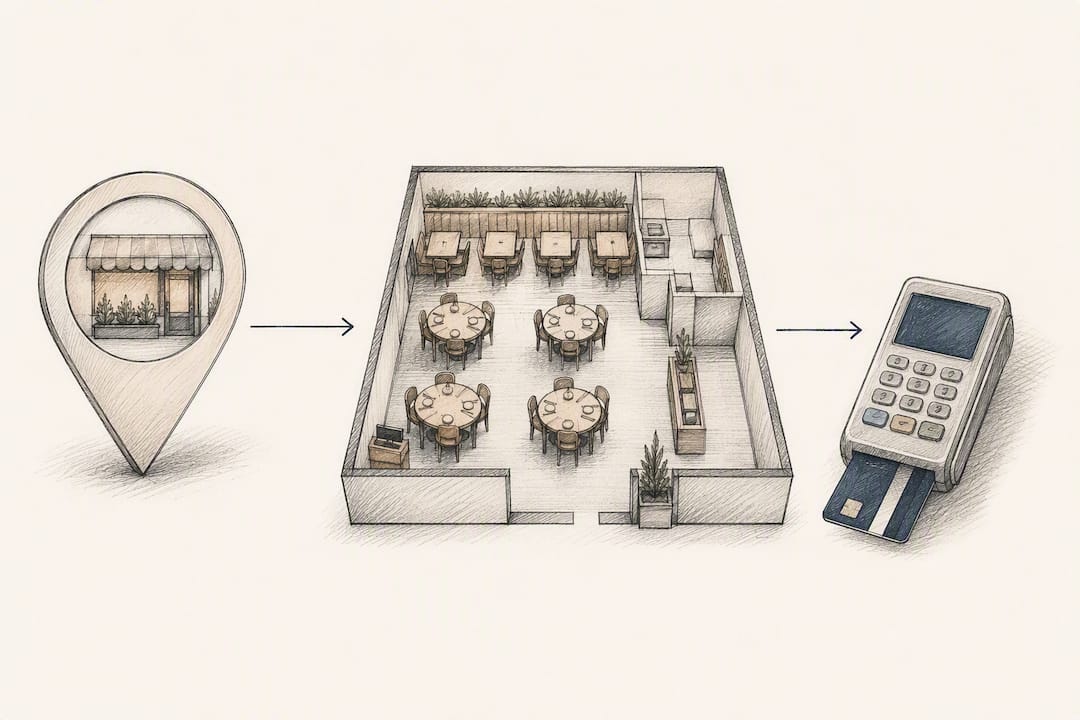
Whatever you choose, ask for a specific onboarding timeline in days, not a vague "quick and easy" promise, and confirm someone will check your floorplan and deposit rules match your old system before you go live.
Restaurants that have already switched platforms
Restaurants facing platform shutdowns aren't a new problem, and the migration patterns are consistent. When Singapore restaurants moved off Chope or Quandoo, Oddle's migration guide found the venues that avoided lost bookings were the ones that ran old and new systems in parallel for several weeks rather than switching overnight.
The pattern holds regardless of destination platform. Venues that treated the switch as a single-day event lost bookings that had been made weeks earlier and never made it into the new system. Venues that built in an overlap window caught those gaps before a guest arrived to find no record of their table.
The commercial lesson matters as much as the technical one. Restaurants that moved from a pure commission model to a flat-fee or commission-free system generally reported the switch paid for itself within a few months once table volume returned to normal, simply because they stopped losing a cut of every booking. That's not a guarantee for every venue, but it's the calculation worth running with your own covers-per-week numbers before you commit to any provider.
Publisher perspective: marketplace reach vs owning your bookings
Marketplaces solve a real problem: discovery. If diners don't know you exist, TheFork's reach genuinely helps. But relying on one indefinitely means paying a toll on every table, forever, and Quandoo's closure proves that toll comes with no guarantee of permanence either.
The smarter path for most restaurants is short-term marketplace use paired with real investment in owned channels: your Google Business Profile, your website, your direct booking widget. Commission-free models like Served's flat subscription cost more to notice and less to run once your direct traffic builds. Vendor lock-in is the risk nobody prices in until the vendor disappears.
— Ignacy Jurkowski
Served: commission-free bookings without the migration headache
If you're leaving Quandoo and don't want to trade one commission structure for another, Served gives you a flat subscription instead, so every booking stays yours with no per-cover fee eating into your margin.

Getting started doesn't require a sales call. Run the free Booking Path Scan first to see exactly where your current booking journey loses diners, then move at your own pace. Served's Visibility Brain plan costs €69 per month or €660 per year, and every tier includes human onboarding support, not a self-serve manual, which matters when you're migrating guest data under a deadline. If you're coming specifically from TheFork, there's a dedicated switching guide that walks through exporting your existing bookings and setting up your new floorplan without losing a single reservation in the process. Start with the free scan today and see what it flags.
Sources
- Restaurant booking platform Quandoo to end services on Sept 30, cease operations by Dec 31 | The Straits Times
- Web
- Switching from Chope or Quandoo: A Singapore restaurant's migration guide — Oddle
- Quandoo alternatives and TheFork market notes — RestaurantBookingSystem
FAQ
Is Quandoo shutting down?
Yes. Quandoo confirmed it will stop taking bookings on 30 September 2026 and cease operations entirely by 31 December 2026, according to The Straits Times. Restaurants should export guest and booking data before the December deadline.
What is a good alternative to the TheFork app?
It depends on whether you need marketplace discovery or want to cut commission costs. Commission-free platforms like Served or Resos suit venues with steady direct traffic, while OpenTable or TableCheck suit venues that need continued marketplace exposure in specific regions.
Is TheFork app any good for restaurants?
TheFork works well for venues that genuinely need marketplace-driven diner discovery, particularly in France, Spain, Italy, and Portugal where its diner network is largest. The trade-off is a per-cover commission on every booking made through the app, which affects margin on high-volume nights.
What is the best restaurant booking system for restaurants leaving Quandoo?
There's no single best system. It depends on whether discovery or cost control matters more to your venue. Served offers a commission-free flat subscription, while TheFork and OpenTable suit venues still dependent on marketplace-driven bookings.
How much does Served cost compared to a marketplace platform?
Served's Visibility Brain plan costs €69 per month or €660 per year, with no commission taken on any booking. Marketplace platforms typically charge a per-cover commission instead, which scales with your booking volume rather than staying fixed.