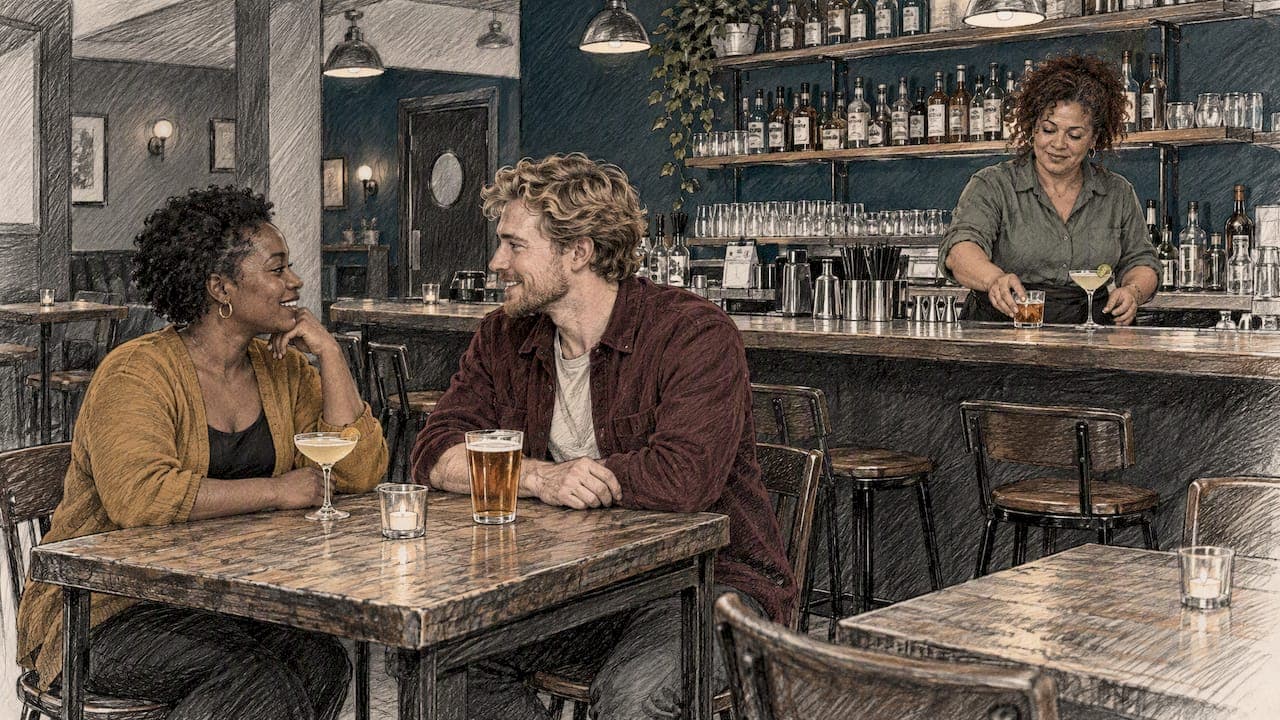
The best bar marketing ideas do three things: get your bar found by people nearby, give them a clear reason to come this week, and make them want to come back. Everything below serves one of those jobs. Pick two or three, run them for a month, and measure the result.
This guide covers events and promotions, social media, email, your Google listing, and the specifics for pubs, cocktail bars and wine bars. No filler. Just what to do, in what order.
TL;DR
- Fix the basics first: a verified Google Business Profile, a readable menu and a booking link that works. Promotions only pay off if people can find you.
- Run a weekly rhythm (quiz, live music, a Sunday offer) rather than one-off stunts. Regular nights build regular guests.
- Collect emails and use them. Email is the cheapest way to fill a quiet Tuesday.
- Give every campaign one goal: awareness, database growth, retention or spend per guest. Then measure it after 30 days.
- Keep your bookings and guest data yours. Commission-based platforms take a cut of the guests you already won.
Table of Contents
- Start with the problem, not the promotion
- Get found before you get clever
- Events and promotions that bring people in
- Social media ideas for bars
- Email: the quiet earner
- Loyalty and repeat visits
- Pub marketing ideas
- Cocktail bar and wine bar marketing ideas
- Our perspective: visibility first, then promotions
- See where your bar loses bookings
- How to tell if your marketing is working
- A simple 30-day plan
- FAQ
- Sources
Start with the problem, not the promotion
Most bars pick a promotion because it sounds fun. Karaoke, a giveaway, a two-for-one. Then it runs for three weeks and nobody can say whether it worked.
Start with a trading problem instead. Ask:
- Which nights are empty?
- Which hours are slow (early evening, late afternoon)?
- Do guests spend enough per head, or do they nurse one drink?
- Do first-timers come back?
A quiet Tuesday needs a habit-forming event. A low spend per guest needs food pairings or bundles. A bar nobody can find needs listings, not discounts. Match the idea to the gap.
A useful frame comes from Bar & Restaurant's 30-day marketing plan. It says every campaign, post and email should support at least one of four objectives: awareness, guest-database growth, guest retention or higher revenue per guest. If an idea supports none of them, skip it.
Get found before you get clever
A promotion that nobody sees is wasted money. Before you spend on anything, check the free basics.
Claim and complete your Google Business Profile
When someone searches "bars near me", your Google listing is your shop window. Google's guidance for restaurants says to claim and verify your profile, keep your address, phone number and hours accurate, add photos and menu details with descriptions and prices, post offers or events, reply to reviews, and monitor searches, menu clicks and completed bookings.
For a bar, that means:
- Hours that include bank holiday and late-night changes.
- A menu with real prices, including your cocktail list and any food.
- Fresh photos of the room, the bar and your best drinks.
- Events posted at least a week or two ahead.
- A reply to every review, good or bad, within a few days.
Make your website do the basics
Your site does not need to be fancy. Orange Jelly's guide for UK pubs says it should make opening hours, a readable menu, location, contact details, booking options and an events calendar easy to find, with the address, hours and booking link reachable from every page.
If a guest has to pinch and zoom a PDF menu on their phone, you are losing them. Our 48-hour bar website fix walks through the changes that stop bookings leaking away.
Check your booking path
The booking path is the route from "I found this bar" to "my table is confirmed". Every extra tap loses people. Search for your bar on your phone, as a stranger would. Can you see the menu, the hours and a booking button within two taps? If not, fix that before running any promotion. Our free Booking Path Scan checks this for you.
Events and promotions that bring people in
Promotions for bars work best when they are regular, specific and easy to explain in one line. Perfect Venue recommends themed nights, live music, trivia, bar games, happy hours and limited-time offers to create excitement, attract different audiences and encourage repeat visits.
Ideas worth trying
- Quiz night. Easy to run, cheap, and it builds a weekly habit. Toast notes that trivia nights can draw crowds.
- Bar games. Pool, darts, board games. The same Toast piece says games can keep customers longer and increase average check size.
- Watch parties. Big matches fill a room. Restaurant Business reports that partnering with local alumni groups for watch parties can prompt group leaders to promote the bar through their networks. In the UK, think supporters' clubs, five-a-side teams and local sports societies.
- Raffles with sign-up. The same source says football-season raffles can draw extra customers and build a marketing database from entrants' contact details. Check licensing and gambling rules for prize draws in your area before you run one.
- Tasting flights and masterclasses. A paid tasting with a supplier raises spend per head and gives you something to post about.
- Happy hour with a purpose. Aim it at your slow window, not your busy one. A discount at 9pm on Saturday just gives away margin.
We have a longer list in our guide to bar event ideas, each with a revenue lever.
Plan the promotion, not just the event
A good event with no promotion is an empty room. Harvest's event guide suggests setting a goal, audience, budget and target, then promoting from about two weeks out. Its channels: your Google Business Profile, social media, email or SMS, in-venue signs and partner shares.
A simple timeline:
- Two weeks out: announce it on social, email and your Google profile.
- One week out: post a reminder with a new detail, such as the prize, the menu or the host.
- Day before: message your list and update your stories.
- Day of: a final reminder and a sign on the door.
The same guide also suggests submitting events to local city calendars and community newsletters, and adding an event page on your own website. Those are free and often overlooked.
Social media ideas for bars
Social media is where most guests first see your bar. Keep it simple and visual.
Sociable City's night-time economy guide suggests short-form video and visually engaging posts to build awareness, then polls, contests and user-generated content to encourage consideration. For retention, it points to regular updates, exclusive offers and personalised content.
What that looks like in a bar:
- Make-the-drink videos. Fifteen seconds of a cocktail being built. Film it during prep, not during service.
- Staff features. People follow people. Introduce your bartenders.
- Polls. Which new cocktail should go on the menu? Guests who vote tend to come and try it.
- Guest photos. Ask permission, repost, tag. It builds community and word of mouth.
- Clear calls to action. Every post about an event or offer should say what to do next: book, turn up, tap the link.
Use local targeting
Paid ads can be narrow. Toast points out that social ads can target people within a defined radius of your bar and can be scheduled for particular days and times. A modest budget aimed at people within a mile or two, running on Thursday afternoons for a Friday offer, goes much further than broad boosting.
If you want a ready-made plan, our four weeks of bar social posts is built for busy teams.
Local audio can also work for the right bar. A community or genre-led station reaches an engaged local crowd, and if your nights lean towards live DJs or soul and R&B, advertising on a music radio station is one way to reach people who already love that scene.
Email: the quiet earner
Email is not glamorous. It is reliable. Evergreen says email marketing consistently delivers the highest ROI of any digital channel and can tell regulars about upcoming events and drive midweek traffic.
Perfect Venue recommends building a list and sending regular, personalised updates about events, new menu items and exclusive offers. It names Wi-Fi access, ordering journeys and website incentives as places to collect addresses.
A practical start:
- Add a sign-up to your booking confirmation and your website footer.
- Put a small QR code on tables or the bill folder.
- Send one email a fortnight: what is on, what is new, one offer.
- Segment later. Start with one list.
Ask for consent clearly, and follow UK data protection and marketing rules. Our email flows for venues cover three simple automations and a 60-day pilot.
Loyalty and repeat visits
The cheapest guest is one you already have. Perfect Venue recommends loyalty programmes offering discounts, freebies or VIP benefits because they reward regular customers and support repeat business and word of mouth.
Keep it light. A stamp card for a free round after ten visits works. So does an early look at new menus for your email list. Do not build something your team cannot run on a busy Friday.

Bounce-back offers help too. The Bar & Restaurant plan describes personalised emails and bounce-back offers as the retention step: a guest visits on Saturday, and on Tuesday they get a reason to return.
Pub marketing ideas
Pubs have an advantage: they are part of the neighbourhood. Lean on that.
- A weekly rhythm. Quiz on Tuesday, live music every other Friday, a roast on Sunday. People remember a pattern. Pick a rhythm that fits your pub, not a copy of the pub down the road.
- Sunday lunch. Post the menu on Thursday and open bookings early. Roasts sell out, so a visible booking link matters.
- Community ties. Sponsor a local team, host a charity quiz, give local makers space for a market night.
- Local suppliers. A guest cask from a nearby brewery gives locals a story and a reason to visit this week.
- Matchday food bundles. A pint and a pie at kick-off is easy to explain and easy to post.
- Dog walkers and families. If your pub welcomes them, say so on your Google profile and website.
These are standard approaches in the trade rather than anything unique to one venue, so test each against your own numbers.
Cocktail bar and wine bar marketing ideas
Specialist bars sell experience and taste. Your marketing should too.
Cocktail bars
- Seasonal menus with a launch night and a short video of each drink.
- Reservations for peak nights. Guests who book are guests who turn up. See our guide to cocktail bar reservations.
- Guest bartender nights. They bring their own following.
- Pairing menus that raise spend per head.
Toast says owners must keep pace with shifting attitudes towards alcohol and give guests distinct reasons to choose their bar. A strong low and no-alcohol list is now part of that.
Wine bars
- Producer evenings with a short talk and a flight of three.
- By-the-glass rotations that change monthly, so regulars always find something new.
- Spritz and aperitif serves for the terrace. Imbibe's piece on the evolution of the spritz describes how venues now feature varied aperitif- and spirit-based serves, including brand collaborations for summer terraces.
- Limited-time drinks and a touch of theatre. For a private party or launch, a champagne tower gives guests something to photograph and share.
Our perspective: visibility first, then promotions
We talk to venue owners about bookings every day, and the pattern is consistent. Most bars start with the loud idea (a discount, a giveaway, an influencer) and skip the quiet one: can a stranger find the bar, trust it, and book in under a minute?
We think the order matters. First, get your listing, menu and booking path right. Then run events. Then build your email list so you stop renting your audience from social platforms. Promotion works on top of visibility, not instead of it.

We also think bars should own their guest relationships. Commission on each booking or cover quietly taxes your best marketing, because the more it works, the more you pay. That is why we charge a flat subscription, take no commission on bookings and never resell guest data. You keep the guest, the data and the revenue.
If you do one thing this week, run a public scan of how your bar looks online and fix the first gap it finds.
— Ignacy Jurkowski
See where your bar loses bookings
Served is a commission-free booking and visibility platform for bars, pubs, cafes and restaurants. You can start with the free Growth Scan, which shows how your venue appears online and where guests drop out before booking. Then you decide what to fix.
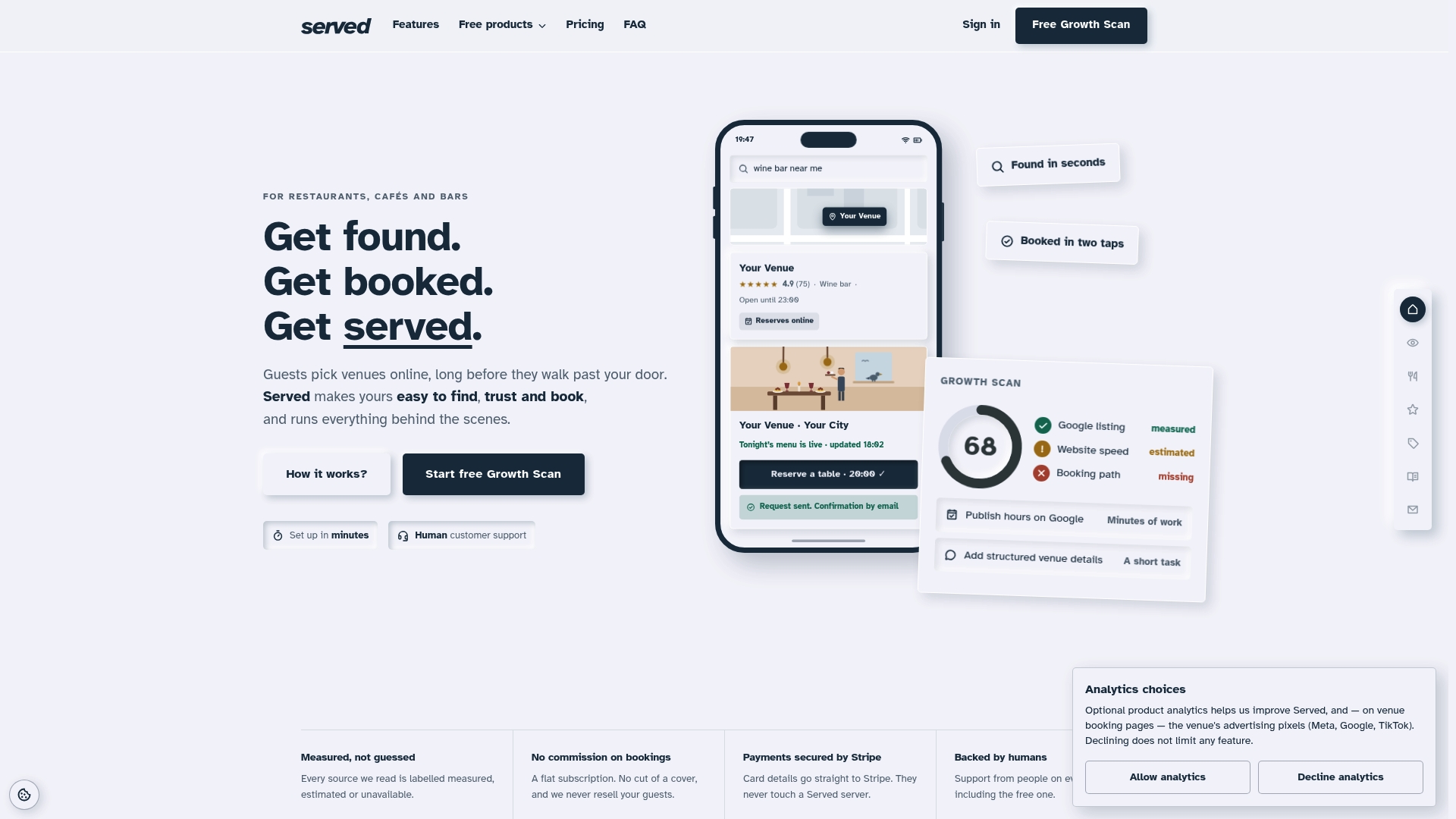
The Free plan costs nothing. Visibility Brain, our paid plan, is €69 per month or €660 per year, with a flat fee, no commission and human support. See Served for bars, compare plans, or run the Booking Path Scan. For a deeper look at the model, read how to grow bar reservations with visibility first or how to find booking gaps and avoid per-cover fees.
Want to see it in practice? The LARY Bar case study covers reviews, ratings and bookings.
How to tell if your marketing is working
Picking ideas is the easy part. Knowing which ones pay is harder.
Bar & Restaurant suggests setting objectives for each campaign and measuring outcomes such as social ad reach, email sign-ups, revenue per guest and return guests within 30 days. Use that as your scorecard.
A simple monthly check:
| Objective | What to track | Where to find it |
|---|---|---|
| Awareness | Social reach, Google profile views and searches | Social insights, Google Business Profile |
| Database growth | New email sign-ups | Your email tool, booking system |
| Retention | Guests returning within 30 days | Guest records, booking history |
| Revenue per guest | Average spend per head | Till or EPOS reports |
Run one change at a time where you can. If you launch a quiz night, a new menu and an ad campaign in the same week, you will not know which one worked.
Give each idea at least four weeks. A weekly event rarely hits its stride in the first two.
A simple 30-day plan
Here is a starter plan that follows the same logic as the 30-day cycle in Bar & Restaurant's guide: awareness, then database, then revenue, then retention.
- Week 1, get found. Verify your Google profile, update hours, upload photos, add your menu, check your booking link.
- Week 2, build the list. Add email sign-up to your confirmations, website and tables. Launch one weekly event and announce it.
- Week 3, lift spend. Add a limited-time drink or a pairing. Post the make-the-drink video.
- Week 4, bring them back. Email everyone who visited, with a reason to return. Review your numbers.
Then repeat, keeping what worked and dropping what did not.
FAQ
What are the best promotions for bars?
The ones that target a specific slow period and are easy to explain: a weekly quiz, a happy hour in your quietest window, a pairing deal or a matchday bundle. Regular beats one-off. Test one for a month, then judge it on spend per guest and return visits, not just footfall.
How do I market a bar with no budget?
Start with free tools. Verify and complete your Google Business Profile, post events there, submit them to local calendars and newsletters, and collect email addresses. Short videos filmed on a phone cost nothing. Paid ads can wait until the basics are working.
What social media content works best for bars?
Short videos of drinks being made, staff introductions, polls about new menu items and reposted guest photos. Pair each post with a clear next step, such as booking a table or turning up for an event.
How far ahead should I promote an event?
About two weeks. Announce it, add details in reminders, then send a final message the day before and on the day. Use your Google profile, social channels, email and signs in the venue.
Do booking platforms hurt bar marketing?
It depends on the model. Some charge per booking or per cover, so the more your marketing works, the more you pay. A flat-fee platform keeps your costs predictable and your guest data with you.
Sources
- Toast: bar marketing ideas
- Evergreen: bar marketing hub
- Perfect Venue: marketing for bars
- Harvest: bar event ideas
- Restaurant Business: Get in the game
- Bar & Restaurant: 30-day marketing plan
- Sociable City: social media in the night-time economy
- Google: Business Profile for restaurants
- Orange Jelly: does your pub need a website?
- Imbibe: the evolution of the spritz